Saturday, 24 January 2015

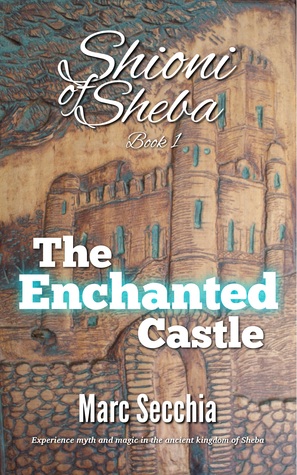
The Enchanted Castle


Review: TheEnchanted Castle (Shioni of Sheba #1)

 
Genre: YA / Fantasy / Adventure

Review:
Wonderful exotic adventure!

The Enchanted Castle is a cracking adventure for teens or young adults of any age in the exotic location of a fictional historical Ethiopia. Marc Secchia has created an outstanding heroine for this story and the series: Shioni is a young slave girl of foreign origin, a maidservant and bodyguard to Princess Annakiya.

West Sheba is a small kingdom within the land known as Abyssinia, and the historical period appears to be about the eighteenth century, perhaps earlier. The king orders a large expedition to reclaim the mountain fortress of Castle Asmat. Hostile mountain tribesmen represent a known danger, but witchcraft increasingly presents an insidious threat, the more so as so few are willing to believe in it.

Shioni is on the best of terms with her mistress the Princess, not to mention the delightful cook and house mother, Mama Nomuula, but the Prince, one of his captains and even the king's General seem to have it in for Shioni, perhaps simply because she is different. While everyone is dark skinned and has black hair, Shioni alone is pale and blonde. She looks like a witch, or a ghost, and when she begins to discover that she can hear things that others can't, that only adds to her troubles.

That this is a young adult book is reflected in the recklessly adventurous nature of Shioni, and also the Princess, and in the breath-holding way they manage to overcome dangers that one might have expected to overpower them. This is also the case in the way the actors are portrayed as 'bad' or 'good' – but let me make clear that this does not mean that the characters are flat. There is a good deal of depth to most of the characters, enough to satisfy many adult readers. Furthermore there is visible growth and development in key players, as events bring them to revise their assumptions and understanding of the world, and of one another.

The plot and pace are first-rate, and the writing is of a professional standard and easy to like. This is the first in a four-book series, but it can be read comfortably as a stand alone story. After reading this one I want to go out right away and get the next, and the next!

What I'm Reading Now:


by Ioana Visan 


Feynard
by Marc Secchia


Added to my To Read list:

Well, there's The King's Horse, The Mad Giant and The Sacred Lake (the rest of the Shioni of Sheba series, of course!), and then one I've been wanting to read for a while now, 
The Girl who Sang with Whales, and in the Dragon Shapeshifter series (after Aranya, which I read last year), #2, Shadow Dragon, and The Pygmy Dragon.

Love this cover!


That should keep me out of mischief for now!

Tuesday, 20 January 2015

Awoken

Review: Awoken

by Sarah Noffke

Genre: Fantasy / SF / Magic realism

Review: 

Gripping magic realism with a great heroine!

Nice cover or no nice cover, I would never have picked this book to read - but I'm participating in a review rotation programme (as distinct from review exchanges) and I wound up with a free review copy of Awoken on my to read list.

I didn't particularly expect to enjoy it. I mean, really? A fantasy all about people who are dreaming, hallucinating, or can't sleep?


Well, how wrong can one be? At the opening paragraph I raised an eyebrow and said to myself, hey, this Sarah Noffke writes at a level above the average! Three hundred something pages later, within the day, I put the book down and drew breath.

So this story is billed as fantasy (or SF), and I would suggest it also has something of the feel of magic realism in the way it wanders in and out of our contemporary world. In Awoken, dreamland is a warscape. There is violence, death, and the wounded lie scattered on the ground. The enemy is in deadly earnest, and so must Roya Stark be - however little she wants to be involved.

Roya is a great leading lady, a fully realised engaging human character with heroic potential. Characterization generally is one of the many strengths of the book. There is a broad range of tensions and relationships between characters, and variation in the extent to which these are resolved in this book. I don't remember when last I encountered romantic connections in a novel and could not tell who would win the heroine's affection in the end. There are some wonderful and unexpected twists in the tale, and in the relationships, particularly those which Roya has with her fellow contenders and the Institute staff members.


The story is excellent and has depth and complexity, and while Noffke does not explain everything she has built her world with care and attention, enticing the reader into complete acceptance of what is actually a quite surreal environment. The action scenes are sharp and fast-moving, and Noffke has done a brilliant job of visualizing dream-combat. 

Partly because there are many doors within it that remain unopened and unknown, the Institute is an intriguing creation. The pace is very good, varying in accordance with focus, but never allowed to lag, and the suspense is sustained until right near the end.

Sarah Noffke writes in a deceptively simple, easy to read style, but she is good - really good. Reviewer Will Marck said, "there is an ‘x factor’ with some writers, where their writing is just likeable", and this is true of Noffke. Not only is her writing style enjoyable, but it has been crafted and polished to a keen effectiveness. There were, towards the end, one or two (literally, one or two) flaws in final edit, but the book's editing is at the same professional standard as that of a mainstream publisher.

In conclusion, I loved this, and I would recommend this book highly to any reader.


What I'm Reading Now:  
The Enchanted Castle
by Marc Secchia


Added to my To Read list:

Broken People
by Ioana Visan


Child of Brii, and Josh Anvil #1

Review: Child of Brii

by Amanda J. McGee

Genre: Romance / Fantasy

Review:
This is a very good story and well told. Although the packaging led me to expect a fantasy tale, it is really a romance which is well wrapped in its fantasy setting.
Child of Brii is Amanda J. McGee's first novel, and while that does show, just a little, she nevertheless achieves a commendable result.

The Endohin are a very good concept, but the world-building seems a little unfinished. I liked the idea, and I enjoyed McGee's presentation, but it didn't seem to gel quite as perfectly as it might have. However, the ways in which their varied powers worked, and the limitations on them, were very well done.

Amaya is a good central character, strong and engaging and not too perfect, and I thought that Yukio's character and transformation was very well executed. For a main character Ryuu was rather flat, but Rin and the other human characters, along with Kostya and his raven Marta are excellent.

The story is great, but subject to some convenient coincidences. This is a problem endemic to romance as a genre, so I'm not faulting McGee for that. Not to introduce a spoiler, for me the conclusion was satisfactory, but just slightly anticlimactic. The pacing is excellent, quite consistent throughout with just the right acceleration at the right time. There are a couple of sex scenes, but nothing that would require an 'adult' rating.

While the book could use a final polish or professional edit, it is presented to a good standard.

I can recommend this book to readers who like romance with a twist of difference, and to fantasy fans who enjoy a love story.


Review: Josh Anvil and the Cypress Door


by Bruce E. Arrington

Genre: Fantasy (middle grades)


Review: 
Very much an unfettered middle grades fantasy framed in a soft SF context, in Josh Anvil and the Cypress Door young teen imagination runs wild. Bruce Arrington does an impressive job of writing from and for the perspective of a fourteen year-old Josh Anvil.

The story is set in Louisiana and revolves around the central character, his family, friends and enemies. I don't think it's too much of a spoiler to say that through strange circumstances Josh acquires a set of unusual powers. The book explores those powers, and the mysterious fires which are being set in the Baton Rouge area. While the main story follows the discovery and development of Josh's powers, there is a parallel story in unravelling the mystery of the fires, as well as a little romance and some consideration of values. The challenges which Josh faces increase in difficulty and complexity in the course of the book.

I loved Arrington's presentation of the impact of dyslexia: tne coupifion wakes life bifficnlt for Josn! The writing style is entirely appropriate and very easy to read. The story does require substantial suspension of disbelief, particularly from an adult reader, because of the somewhat unrealistically accepting responses of the adults in the story - but this is because it is a book for younger teens, and I believe that the same factor will make it even more enjoyable for this target readership. There are some - very rare - editing flaws, but the book is presented to a professional standard. Readers should note that this story is clearly the first in a series and ends on a cliffhanger. The book can still be enjoyed on its own, as Arrington ties up enough of the ends of this first story to satisfy most readers.

This is beautifully executed teen escapism which will engage young people, and I would strongly recommend it for readers aged 12-16 or thereabouts.


What I'm reading now:

Awoken
by Sarah Noffke
 

(and I'm loving it!)


Added to my To-Read List:

A Marc Secchia spree!
In no particular order,
The Pygmy Dragon
The Girl who Sang with Whales
Feynard
The Enchanted Castle

I read his Aranya, the first of the Dragon Shapeshifter books, which was fantastic, so I'm really looking forward to these!

Thursday, 8 January 2015

Ataxia and the Ravine of Lost Dreams Review and Author Interview


Review: Ataxia and the Ravine of Lost Dreams

by Rachel Barnard

Genre: Science Fiction

Review:

Ataxia is a fascinating SF young adult adventure set in a rather dark future America, or the 'New American Nations', which comprises more of our present world than the USA does today. Rachel Barnard has created an original vision which has depth and drama.

In Ataxia and the Ravine of Lost Dreams, a group of young people are being trained and tested at 'the Academy'. They believe that their performance will be critical to their future in their somewhat 1984-ish country. The outstanding achievers hope to win influential positions in government. Ataxia is a dissident and revolutionary organization which is against the reigning establishment.

The heroine of the story is a girl who has been inserted into the Academy by Ataxia under the assumed identity of 'MC'. Her aim is to become a top competitor at the Academy so that she can get a position that will allow her to work at bringing down the establishment from within. However, the story is set almost entirely within MC's career at the Academy. MC and other characters are startlingly willing to engage in physical violence against fellow students. I put this down to the society they live in.

MC must struggle in her relationships with other students (and competitors), even while she tries to work out which side her friends and enemies are really on. She is a very well depicted young adult, with a strong character but from time to time showing the self-doubt and changeable nature of her youth. At the same time there is the dominating presence of the Cube and the weekly contests which are held within its mysterious bounds, within which MC must perform to the limit of her not inconsiderable ability.

The Cube is the crown jewel of this book. Brilliantly imagined, with a unique combat system and technology, it offers limitless variety, wonder, and the drama of face to face confrontation with enemies and friends. The Cube is one of the prime tools of the Academy in assessing the students - but it also holds a secret. If you were wondering about the cover of the book, I believe it shows MC dodging a fireball in the Cube.

This brings me to Rachel Barnard's signature writing style. Barnard does not explain everything to her readers, and does not tie up all the loose ends. Her style is distinctively personal but easy to read and quite accessible. However, she does expect her readers to use their own imagination and intelligence to fill in the gaps she has, I believe intentionally, left in her world. Some readers will not like this, although I don't personally have a problem with it. I think that the author's intention is to push the reader to engage personally with the ethical and conceptual issues she is addressing through her work.

This book is brilliantly original and has a very well executed concept. I loved the way relationships changed, and failed, and the way people misunderstood each other; it made everyone more real to me. Cube combat, the changing world within it, and the different approaches to its tests, were constantly fascinating. The story is gripping, the pace is lively, and I really enjoyed it. I recommend it to anyone who enjoys original SF.


Interview


Rachel Barnard is a talented Indie author who has published one book of poetry, two novels and is working on another novel.

Q: Hi, Rachel, and welcome to my blog. Thank you for being willing to do an interview!

RB: You're welcome - and it helped that I already knew that you liked my work!

Q: I think you're an unusual writer with a unique personal style. Why do you think that is, or what has made you the writer that you are?

RB: I'm different, just like everybody else… I've been influenced by a different combination of people and events in my life. My dad has a unique sense of humor that I grew up around. I loved science fiction and strong female characters in fiction growing up. Books in those styles heavily influenced how I viewed books and subsequently how I write them. Some authors don't have a unique personal style because they haven't found it yet, but I had mine from the start.

Q: I hope you don't mind me being provocative. May I suggest that, because your style is different, you may be alienating some readers?

RB: There are so many different kinds of books and so many different kinds of readers, so of course some readers will not like some books, but David McCullough pointed out that, "…even if you're one in a million, on a planet of 6.8 billion that means there are nearly 7,000 people just like you." My style may be different and unique, but I have 7000 people just like me that will love my books and my writing style.

Q: I admire your position. I think many young writers need this kind of self-possession, or is it self-confidence? Still, you've had one or two vicious reviews.  How do you respond publicly to malicious criticism? How do you feel privately?

RB: I grew up rather sheltered and couldn't comprehend that people could be malicious in real life. I always thought the bad guys were bad guys on TV and in books. The fact is that the world is full of mean spiteful people, I just happened to meet more than one in the form of reviewers for my books. Any review that is less than positive affects an author. My very first review from someone I didn't know was one of these and it struck me down because all my feedback had come from friends and loved ones before. I started to doubt the validity of their opinions and my abilities as a writer. Reviews that attack the author, and in regards to the ones I've received, just go to show the ignorance, attention seeking, put down attitudes of the person. You'll notice that the harshest reviews don't come with a face, but only an internet anonymous identity. It's very easy to be vicious on the internet and I try not to respond publicly at all to malicious criticism.

Q: That's good advice for any author!
I have read a little of your poetry - which I love, by the way! Would you mind telling us why you like to use Spanglish?

RB: I love words and I love to expand my vocabulary in English and Spanish and other languages. I like to twist two languages together to make something to capture the essence of both.

Q: You've impressed me with your feel for words and language, especially in your poetry. 

Q: However, I really want to talk about Ataxia - after all, that's what this post is about! Where in the world - or out of it! - did you get the ideas contained in Ataxia and the Ravine of Lost Dreams?

RB: At the height of the dystopian craze, I woke up one morning with a vivid dream of the Cube (the training ground at the Academy in Ataxia) and went from there. I was influenced by my childhood love of Ender's Game by Orson Scott Card and my growth as a young adult In knowing that the world was not centered around me and that I was not invincible (MC's beliefs in Ataxia). These are two common beliefs in teens and I was starting to see my own self-centered and invincible ideas crumble away as I stepped into adult responsibilities. I explore this concept in MC's narrative.

Q: Let me push you some more. Based on several reader reviews, don't you think that in Ataxia you've left too much unexplained, and too many loose ends?

RB: Readers today like to be given the whole story without having to make those leaps of imagination and for that I think I may have left too many loose ends, but not for the sake of Ataxia itself. One of the many reasons I self-published Ataxia was that it didn't meet the model of traditionally published books in the YA category. The original edition was over the average word count for a young adult book and it featured a theme that was running dry (girl vs. corrupt society). It is also geared toward a more imaginative and fill-in-the-blanks thinker.

Q: One of my most admired authors is C J Cherryh, who, if to a lesser extent than you do, also doesn't explain everything to her readers. She comes closest in, for example, her fantasy novel The Goblin Mirror, which is about as enigmatic as Ataxia. So I agree with you that many readers have gotten too used to being spoon-fed everything.

Q: Who or what was the biggest help to you in completing and publishing Ataxia?

RB: May I share a personal story of my journey publishing Ataxia?

Q: Sure!

RB: I have always been a writer and have always loved writing. I have many ideas buzzing around in my head all the time, but it wasn't until I was prompted by someone to write out the story of Ataxia that I began writing fiction in earnest. Before Ataxia I wrote poetry and flash fiction. I was encouraged to write Ataxia and the man that encouraged me also promised to sell my book and do the marketing/promotion. He was not an honest person and over time he got more and more malicious. By the time I had finished writing the novel and editing as I went along, he had published it under his name without my permission. Because of that I was spurred to finish my final editing and create a cover and get my book published under my name as soon as possible, while at the same time calling out Amazon to take down the copyright-infringing version under his name. This is the story I have not publicly told the world, but influenced my timeline for publishing Ataxia.

Q: I appreciate your candor. Fellow writers and new authors reading this, take heed!

Q: I think Ataxia would make a wonderful movie! Any ambitions, or prospects in that direction?

RB: I envision Ataxia in my mind (as I wrote it and as I read it) as a movie, but I've finished with Ataxia and I'm moving on to new books. I already have an idea for a movie script that I think would be stellar (a science fantasy similar to Timer and Frequencies) that I would rather devote my time to than translate Ataxia into a screenplay. Also, a lot of Ataxia is internalized thoughts that wouldn't translate well into a movie.

Q: Where do you write, and if it is at a desk, what does your desk look like?

RB: I wrote my entire NaNoWriMo novel on my Microsoft Surface tablet and do quite a bit of writing and reading on that device, but for anything that requires a mouse and heavy copy-pasting I use my dual screens at work.

Q: How disciplined are you as a writer in terms of writing hours per day, words per day or per week or whatever? What keeps you going?

RB: The two writers that I currently admire the most, Hugh Howey and Ksenia Anske, have very disciplined writing habits. I admire this commitment, but I don't write full time. I have a full time job and other hobbies and activities I enjoy. I write in between these activities and usually reserve 30 minutes before work to write and to blog. I made a habit of getting up earlier for NaNoWriMo and have stuck with the habit as I do my best writing in the morning when my thoughts are fresh. My goals are what motivate me to keep going and I'm happiest when I'm accomplishing something. I have daily lists and weekly lists and schedules for my author goals that keep me on track to meet my self-imposed deadlines.

Q: You're an Indie, so this is an important question. How do you define success as a writer?

RB: Most of my success is defined by my own internal goals as a person. I'm a listaholic and I've created goals for myself since I was young(er). As an Indie author my highest goals are to be traditionally published. Sounds like an oxymoron, but for me to be validated as a writer would be to either make a bundle of money with my books or to be traditionally published and I think that making a significant amount of money selling books is a lot more difficult than having one of my manuscripts taken up by a publisher.

Q: What can you tell us about your involvement in the Indie writing community?

RB: I'm involved in a local writer's group called FreeValley Publishing. We're a community of 8 local writers here in the North Bend/Snoqualmie/Maple Valley area that supports writing and writers. I also support any local Indie authors that I can find in the Greater Seattle area. I read Indie books and write reviews on my website (rachelauthorbarnard.com) and in 2015 will link up with Indie author supporter Jo Michaels for my reviews. I'm heavily involved with Goodreads and Indie groups on that website. If you're an Indie author and I like your books, I will be your biggest fan. I may be a writer, but at heart I'm a die-hard reader.

Q: Jo Michaels is doing great work; I also signed up for the 2015 review team! (Aside - Hi Jo!)

Q: Who or what successfully distracts you from writing?

RB: Everything distracts me from writing! I'm not an author who writes every day, but I'm always working on something towards my author goals (reading Indie books, updating my website, blogging, talking with others on Goodreads and facebook, etc.).

Q: If I wanted to become a writer and I was thinking about following in your footsteps, what advice would you choose to give me?

RB: Research! Know what you're getting into before you hit publish. Know what it takes to edit and format your manuscript. Make sure someone other than yourself reads your manuscript before its published. 

Q: And, I would want to add, someone who isn't too close to you personally.

Q: What are you working on now, and when might it be available?

RB: I'm in the editing process of the novel I wrote during the National Novel Writing Month in November of 2014. It's a young adult novel currently titled "Donuts in an Empty Field." It's about two best friends who work through issues of life, death, and the local food challenge. It will be available in 2015 if I self-publish.

Q: Well, I for one will certainly be looking out for it!  Thank you for your time, and I hope you achieve all your goals in writing!

RB: Thank you, and all the best to you too.

Rachel Barnard's bibliography to date:


Wandering Imagination (Poetry anthology, January 2013)
Ataxia and the Ravine of Lost Dreams (SF novel, March 2014)
At One's Beast (Fantasy novel, July 2014)
Free Flowing Stories (Contributor, Asst. Editor, November 2014)

What I'm reading now:


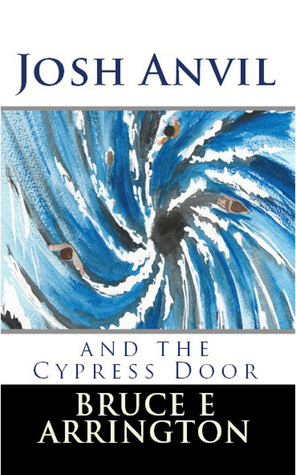
Josh Anvil and the Cypress Door
by Bruce Arrington

I'm about halfway through this amazing middle grades fantasy!


Added to my To-Read List:


Child of Brii
by Amanda J. McGee


Tuesday, 23 December 2014

Mercenary

Review

Mercenary

by David Gaughan


A historically-based biography of an American mercenary and entrepreneur with the somewhat improbable but real name of Lee Christmas, who was active around the dawn of the 1900s, primarily in Honduras.

Lee Christmas's life story offers the author rich material to work with. He grew up in an American South gripped by poverty and with few opportunities to better himself, yet he was clearly a man of great natural talent. He was also seriously flawed. From falling asleep while driving a train drunk, or hungover, and causing a head-on collision which he narrowly survived, to exercising very poor judgement in his entrepreneurial ventures, Christmas constantly makes mistakes as well as occasionally getting things right. Christmas is billed as the man who single-handedly changed the course of history in Central America. This claim has some truth to it, but it is not the whole story. Christmas was influential in key ways in the events described in the book, but he did not act single-handedly, and the author's sources ultimately go back to Christmas himself to a great extent, so the reliability of the reports of his actions, and the extent of their influence, may be open to question. However, what is clear nevertheless is that Lee Christmas was a real life man who lived life to the full, and then some. It is amusing to note that so ordinarily reliable a source as the New York Times erroneously reported his death in action.

The biggest problem I have with the book is the writing style. It is very ordinary and seems unengaged with the characters and the events. The adjective that persists in coming to mind is 'pedestrian'. The book reads like a newspaper article, or an encyclopedia entry. The action scenes were a tiny part of the book - probably less than five percent of the whole. Lee's love life, if one can call it that (although he did marry three times) is described at a very conservative and safe distance. Lee's drinking is better described, but again lacks any immediacy. There is no real characterization as such; it is all based on describing the historical man as best Gaughan has been able to exhume him. Other reviewers have reported being unable to finish the book, and I believe that the dull writing style is the reason. 

Perhaps the comparison should be made with a history book, because the author has made a serious and commendable effort to properly research Lee Christmas's life and the events in which he was involved. The fact that alternative sources are practically impossible to come by is not the author's fault. I would suggest the book is being marketed to the wrong audience, i.e. military/adventure readers, who find virtually no military action between the covers, and while there is plenty of adventure it is described in a dull way. It would be better presented as a historical biography of good quality.

One oddity of the book (the Kindle edition) which struck me as I began reading it was the lack of a table of contents near the front. In fact the book has a table of contents, but for whatever reason it is located on the very last pages, so that one finds it when one has finished reading the story.

Recommended for history buffs of the turbulent times in Central America at the dawn of the 20th Century.


Currently Reading

Ataxia and the Ravine of Lost Dreams
by Rachel Barnard


Monday, 15 December 2014

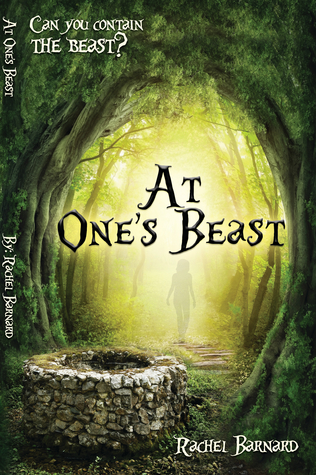
At One's Beast

Review

At One's Beast
by Rachel Barnard

This is an immersive fantasy for young adults, but with broader appeal and deeper purpose. It is a relatively quick read, what I would call a long novella or a short novel. The setting is the isolated pastoral village of Frey, which is surrounded by a wild and largely unknown forest.

The key physical feature in the story is a mysterious well in the forest, which the villagers use in an annual cleansing ceremony, as a receptacle of all their ill-will from the past year. The well no longer contains water, but exudes an accumulated dark menace; however, "No one has ever fallen into the well."

There are three main human characters: Zosimos or 'Zos' for short, and Alcina, who are children when the story begins, and Aethon, of similar age but whom we meet a little later. The events in the main body of the book take place ten years after the opening scenes, when the three have grown up. The Jackal is also an important character, whether primary or secondary depends on your reading of the book.

Barnard's writing style is good, easy to read, and a comfortable fit with the content.

Before I go on to the good, and why you really should read this book, let me deal with the negative. Perhaps intentionally, Rachel Barnard has set Frey in an extraordinary isolation. There is virtually no contact with the outside world, and when the villagers do request support from Aporia, it takes weeks to arrive. Yet the village has such things as books, which require a minimum degree of technology to produce. So I felt that there was a gap in the book's logic where the setting was concerned: it wasn't clear how the villagers were making a living, or how the village continued to survive. This may have something to do with the author's underlying aims with the story, see below. The Jackal appeared oddly enormous where the real life animal is quite small - but then, this is a fantasy, and the Jackal has a symbolic role.
There are also some minor failures in editing: an occasional typo or odd word choice. I must emphasize that these are rare, and do not detract from the reader's experience.

Now, what makes this book special, and why should you read it?

Firstly, it's a great story. There is drama, there is a mysterious beast of the forest which the villagers perceive as a destructive enemy and which they try to appease by offering an annual sacrifice. There is romance and tension. There is love, there is quick judgement and rejection, there is the eternal struggle of conflicting human emotions. The characters are endearing, particularly Zos and Alcina. There is the sway of influence between the chaotic forest and civilized village life. The story grips, the characters struggle with themselves and with one another, and with the revelation of buried truths.

Most importantly, this is not just another light fantasy. Rachel Barnard has aimed high. In At One's Beast she strives to address profound truths and ethical challenges through the model of this isolated village and its well of darkness. Where does ill will go when we have gotten over our hurt or our anger or malice? What is the impact upon the society we live in - and, how might it manifest if it were magically visible? What might one achieve if, instead, one were at one's best?

Sunday, 14 December 2014

Iron William and the Carpenter's Tears

Review


Iron William and the Carpenter's Tears
by Michael Gardner

'Iron William' Kidd, who acquires the apt soubriquet in this story, has a mission impossible thrust upon him. It's not his fault, but neither does he have any choice, not if he wants to live - and the Church of Rome would make a deadly enemy. Although the story is fiction it is set in the competently replicated historical period of the Reformation, in the mid-16th Century. The action takes place in Mediterranean Europe, in fact across most of it, from one end to the other and half-way back again.

There are a number of clearly defined characters in this book, in addition to Kidd himself, both friends and enemies. Kidd is particularly well done, and the main characters are all well drawn. William Kidd has an arch-enemy in Hamilton Rush and the dearest desire of each is to see the other dead, by fair means or foul. Pages turn easily, the pace accelerating nicely towards the brilliant conclusion.

Somewhat reminiscent of Sam Llewellyn's 'Gurney' books, from the reader's perspective Iron William's adventures are as fun-filled and action packed as those of any Tomb Raider or Indiana Jones. On land or at sea the crises are relentless, and William must dig deep within to find the resources to be true to himself, whatever the cost. Strongly recommended to anyone who enjoys a rousing historical adventure.


Currently Reading


At One's Beast
by Rachel Barnard

Will be a free ebook on Amazon on December 18 and on Christmas Day -
I'm half-way through it and can confidently say, go on, treat yourself!


Ataxia and the Ravine of Lost Dreams
by Rachel Barnard

I was going to read this next but got temporarily sidetracked by the above!


Added to my reading list


Mercenary
by David Gaughran


This is probably Bruno Goncalves' fault.

See my review of Descent into Mayhem!